 |
   |
|
|
 |
Meet the “Evolutionary” Engine Powering Freight Rail
Freight rail is the backbone of modern supply chains, moving the essential goods that power industries, communities, and economies across North America. According to the Association of American Railroads, the industry transports approximately 1.5 billion tons of freight over 135,000 miles of track each year. From food and clothing to automobiles, fuel, and construction materials, rail touches nearly every aspect of daily life. For nearly 2 centuries, locomotives have served as the muscle behind this system. During that time, 2 primary power sources, steam and diesel-electric, defined the freight rail industry. Steam dominated rail for a century until October 1925, when General Electric, in partnership with Ingersoll-Rand and the American Locomotive Company, introduced the first diesel-electric locomotive for the Central Railroad of New Jersey. That milestone marked the beginning of a gradual transition from steam to diesel-electric power, which remains the industry standard today. “Edison had always been intent on offering railroads a cleaner, more economical alternative to steam,” says Steve Gerbracht, director, Locomotive Architecture and Concept Development at Wabtec. “This marriage of the internal combustion engine with Edison’s arsenal of electrical components and propulsion equipment literally changed locomotive history.” There were several diesel-electric engine platforms that served the industry since then, but it was in the early 2000s when plans for a new engine started. At the time, Wabtec (then GE Transportation) faced an important decision. With Tier 2 emissions standards for CO2, oxides of nitrogen (NOx), and particulate matter (PM) set to take effect in 2005, should the company modify its popular FDL locomotive engine to meet the stricter environmental regime or adopt a different strategy altogether? Sensing that sustainability was here to stay and that emissions standards would continue to rachet down in the future, Wabtec invested in the future, developing a new engine platform instead of making a short-term upgrade to its legacy FDL locomotive. The Evolution Series Locomotive was born. For approximately 20 years now, the Evolution Series engine platform has been a fundamental part of Wabtec’s portfolio and its customers’ fleets. It addressed freight rail’s immediate challenges, while providing a strong foundation for continuous improvement, breakthrough innovation, and step-change advances that have guided the railroad industry to this day, all while complying with ever more restrictive emissions requirements.
When the EPA signed Tier 4 emissions standards into law, it set an incredibly high bar. By 2015, railroads would have to reduce PM and NOx emissions in new engines by 90% versus older locomotive models. While the 7-year (2008-2015) phase-in period provided locomotive manufacturers some cushion, the exacting new standards left nowhere to hide. The Wabtec approach incorporated EGR technology instead of aftertreatment technology, avoiding the need for cumbersome, expensive, and performance-draining emissions systems altogether. The design worked. More than 1,000 Wabtec Tier 4 locomotives are in operation today. These 6-axle giants deliver 4,500 hp and can reach a maximum speed of 120 km/h while pulling thousands of tonnes of freight. And the combination of strong fuel and operational performance, along with meeting emissions standards, made the Wabtec Tier 4 engine a popular choice across multiple applications, from marine to locomotive and high- to low-horsepower environments. “The success of our Tier 4 engine is really a function of a solid technology development plan and a very committed team to drive its implementation to the required level of efficiency and reliability,” says Rogerio Mendonca, Wabtec’s president, Freight Equipment. “We’ve got 10,000+ Evolution Series engines running around the world today, of which more than 1,100 are Tier 4. It is important to remember that these platforms are built on decades of proven performance, which is what our customers are really looking for from us.” The Evolution Series Tier 4’s ultimate success, and the reason it is factoring prominently in the sustainability ambitions of Class 1 railroads, is that it is a proven platform for ongoing innovation. Since its introduction in 2015, Wabtec invested heavily in its Tier 4’s performance and adaptability to new, more environmentally friendly fuel sources. On the performance front, Wabtec has continued to improve reliability while teasing out additional fuel efficiency. In fact, Wabtec is testing new fuel-saving solutions similar to its FDL Advantage product to reduce fuel consumption and emissions. For example, today’s Wabtec Tier 4 engines can run on biodiesel and renewable diesel fuels, as well as liquified natural gas. These lower-carbon options provide railroad carriers maximum flexibility to pursue the decarbonization path that is right for them, an approach that helps them meet current regulations and near-term sustainability pledges. The options and innovations don’t stop there. In fact, they are only just beginning as Wabtec continues to prepare the Tier 4 engine to burn various alternative fuels. And while this next chapter in the pursuit of sustainable solutions will take time to play out and achieve commercial viability, the Tier 4 will be there when it does, just as it is here now delivering customers a reliable ‘near-zero’ path as long as is needed. A Bridge to the Future “Our job at Wabtec is to have one foot in the present to help customers meet today’s challenges, and one foot in the future to ensure they will be able to capitalize on tomorrow’s opportunities,” concludes Mr. Mendonca. “Our Evolution Series Tier 4 Locomotive is the bridge technology that reliably spans our customers’ and industry’s evolving sustainability needs.”
|
|
|||
© InfraStructures - Tous droits réservés - All rights reserved |
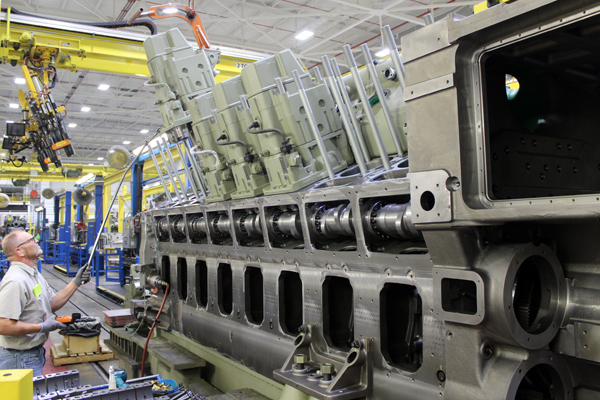
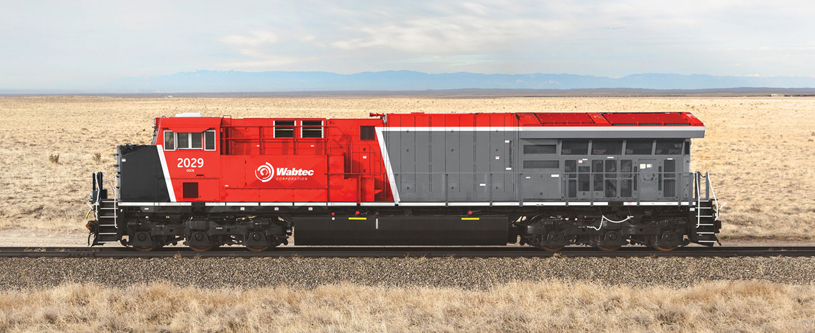
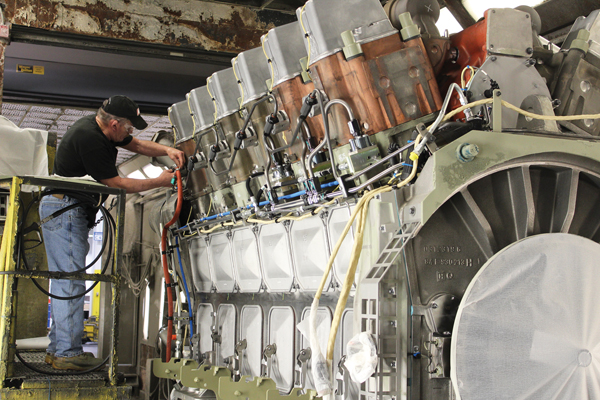 Wabtec’s investment and exploration in the use of alternative, low- and no-emissions fuels for its Evolution Series platform has positioned these versatile engines as the bridge technology to reaching the rail industry’s emissions goals. Wabtec Tier 4 engines are already hard at work accommodating a significant number of decarbonization and sustainability technologies, while the transition to pure zero-emissions technologies mature and evolve.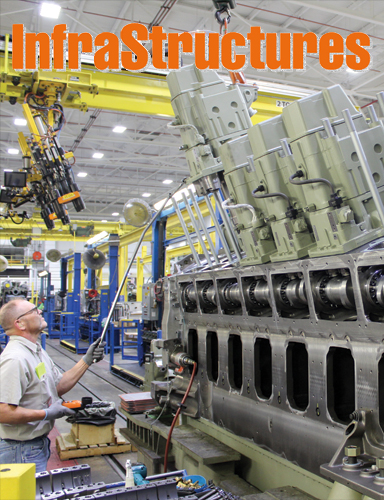
 Partagez sur Facebook / Share on Facebook