 |
   |
|
|
Advanced Thermoplastic Resins for Manufacturing Wind Turbine Blades
The vast majority of wind turbine blades ultimately end up in landfills at the end of their life, posing both environmental challenges and financial losses because of the lack of recovery of materials. And as wind energy continues to expand, so, too, will the pile of decommissioned blades left in its wake. A truly sustainable, cost-effective, renewable energy revolution is now within reach, thanks to the National Renewable Energy Laboratory’s (NREL) groundbreaking thermoplastic resin research for wind turbine blades. The award-winning technology will disrupt the wind energy industry’s turbine manufacturing process, potentially enabling recyclable blades that no longer end their usefulness in a landfill. Thermoplastic resins, combined with thermal welding techniques pioneered by NREL and partner Arkema Inc. at the Composites Manufacturing Education and Technology (CoMET) Facility, offer the potential for stronger, less expensive, and longer wind turbine blades, increasing energy capture, decreasing energy and transportation costs, and increasing blade reliability – critical to advancing the wind energy market.
Evolving Business-As-Usual Blades Thermoplastics have the potential to revolutionize the wind energy industry, introducing a new era of next-generation materials, fabrication, testing, and welding techniques. Arkema’s Elium resin is a 2-part liquid reactive thermoplastic that blends together the advantages of thermoset and thermoplastic resins. Elium thermoplastic resins can serve as a drop-in replacement for epoxy. Thermoplastics and thermal welding make recycling a snap, and the improved structural dampening of thermoplastic blades leads to improved fatigue performance and turbine longevity.
To test this groundbreaking thermoplastic system, NREL researchers first constructed a 9-m turbine blade to demonstrate manufacturability and then a 13-m blade that they put to the test, validating the blade for strength and other performance characteristics. The 9-m wind blade, produced at NREL’s CoMET facility, exhibited impressive results, such as reduced equipment costs and cycle time. The team then built a 13-m blade, employing the cutting-edge structural validation laboratories at the Flatirons Campus to test it. It found that the thermoplastic blade had similar stiffness to an epoxy blade. It simulated 20 years of use on the blade to evaluate durability. The Elium thermoplastic blade exhibited 5 to 7 times higher levels of structural damping than the epoxy blade. These findings suggest that by employing thermoplastic blades, we can also expand the life span of the entire turbine. These next-generation thermoplastic blades build off the successes of the business-as-usual epoxy blades and transform them into an environmentally friendly, cost-effective blade of the future. The researchers found that the process and material demonstrated potential for:
NREL’s thermal welding technique – coupled with Arkema’s resin system – earned a 2020 Special Recognition Award from R&D 100 for being a “market disrupting” technology.
|
|
|||
© InfraStructures - Tous droits réservés - All rights reserved |
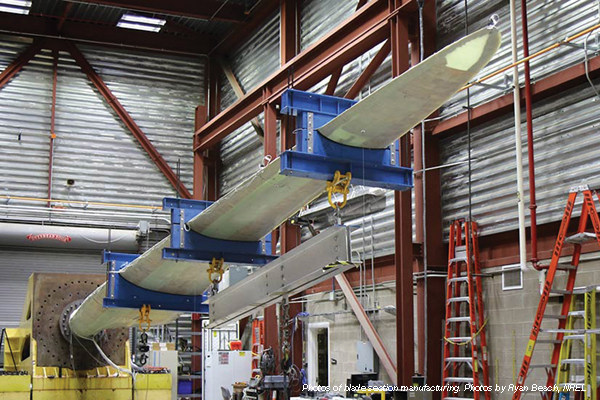
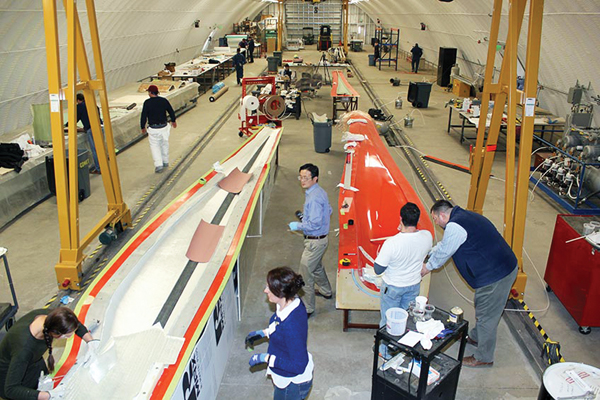 These saltwater-safe thermoplastic blades also prime the marine energy industry for success, providing this emerging field with the durable, cost-effective materials on which to set sail.
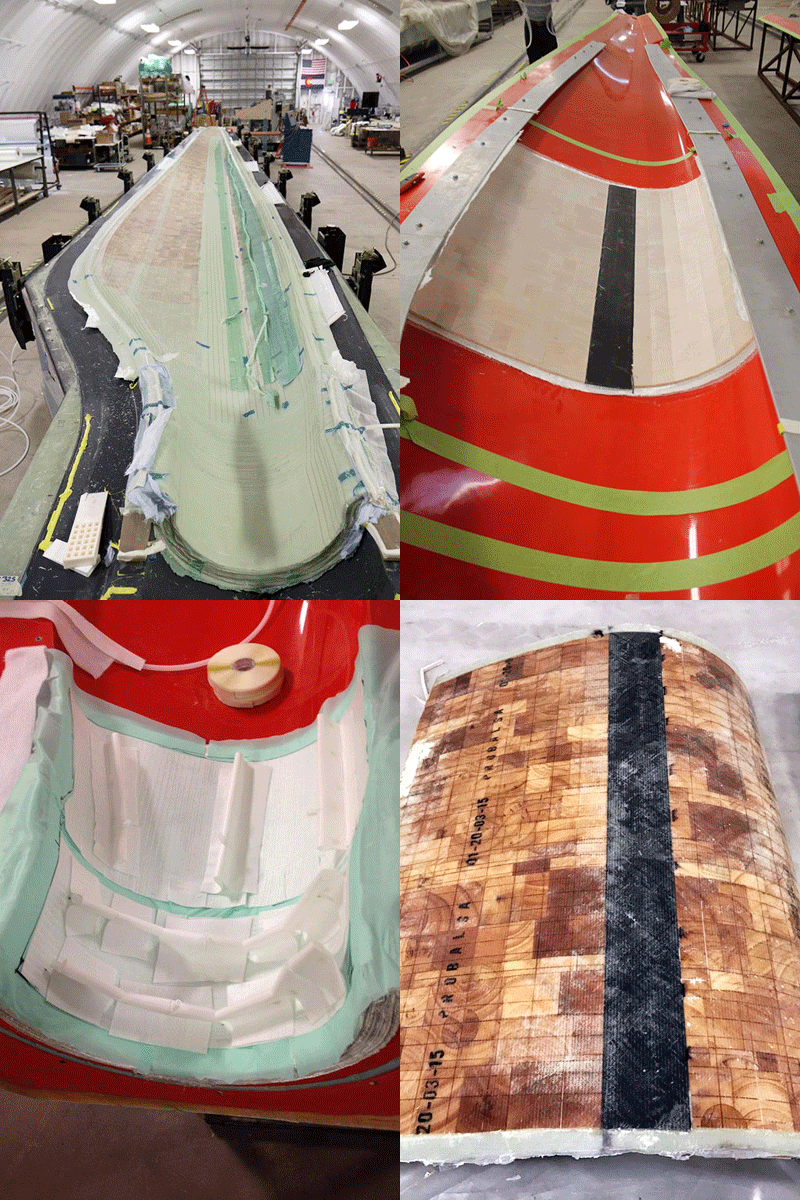 Until just a few years ago, there had only been small-scale demonstrations of this exciting, new material. NRL’s team quantified and demonstrated how thermoplastic blades developed with Arkema’s Elium thermoplastic resin, in conjunction with thermal welding, can be potentially recycled at their end of life, reducing the time, cost, and energy involved in manufacturing.

 Partagez sur Facebook / Share on Facebook