 |
   |
|
|
Beyond Ownership: How Rentals Are Reshaping Construction Equipment Strategies
The rental market for construction equipment is experiencing accelerated growth, and it’s not happening by accident. For contractors, construction companies, and landscaping operations, the conversation around equipment has fundamentally shifted. Investing in ownership has always been a serious commitment, but in today’s market, it’s become a risk calculation contractors are increasingly choosing to avoid. A contractor staring at a sizeable excavator price tag has to ask a hard question: will this machine earn its keep year-round, or will it sit idle for months? Increasingly, that question is driving contractors toward rental, not as a fallback, but as a deliberate, calculated business strategy. And rental adoption has accelerated across construction and landscaping sectors precisely because it makes financial and operational sense. Why the Rental Market is Growing Rather than committing capital to machines that generate inconsistent utilization, contractors are thinking strategically about total cost of ownership. When you factor in purchase price, maintenance costs, downtime risk, storage, insurance, licensing, and eventual resale value – not to mention opportunity cost – the equation changes dramatically. Capital that would fund full equipment ownership can instead fund payroll during slow periods, secure materials for new jobs, or support business development that actually generates work. This reflects a fundamental shift in construction business strategy. When contractors factor in the full cost equation, rental becomes a smarter financial choice for many applications. What Rental Make Strategic Sense for Contractors Capital preservation. Rental preserves working capital for critical business needs: payroll, materials, and revenue-generating initiatives, instead of tying it up in dormant equipment. Maintenance liability disappears. Rental equipment arrives ready to work. The rental operator handles maintenance, repairs, and replacement. That eliminates downtime and frees your teams to focus on revenue-generating work. Operational flexibility. Contractors bidding on specialized or one-off projects can access necessary equipment for the duration of that job without permanent capital commitment. Seasonal work no longer requires year-round ownership of seasonal equipment. Need a specific attachment or machine variant to win a bid? Rent it. That flexibility directly allows contractors to bid on work they might otherwise pass on, while doing so with less financial vulnerability.
What Rental Operators Need from Equipment Rental machines must perform reliably across diverse operators and applications. They transition quickly between renters with minimal downtime. Customization must be limited; rental fleets succeed with equipment that works effectively out of the box across multiple applications. Durability and intuitive design are non-negotiable. Equipment with straightforward maintenance, predictable performance, and operator-friendly controls performs better in rental scenarios. Machines that reward operator care without penalizing operator mistakes reduce risk for everyone involved. From the rental operator’s perspective, equipment engineered for accessibility, durability, and reliability directly impacts profitability. Dealer support becomes critical. When issues arise during a rental period, response time matters. Delays don’t just affect utilization rates, they affect contractor credibility with customers. In rental scenarios, reliability isn’t just a feature; it’s shared operational liability between manufacturer, dealer, rental company, and contractor. The Broader Shift For equipment-driven businesses, incorporating rentals into their operating model reflects a smarter way to manage assets. Rentals provide access to capability without capital burden, operational flexibility for changing demands, and the financial discipline increasingly required in competitive construction markets. |
|
|||
© InfraStructures - Tous droits réservés - All rights reserved |
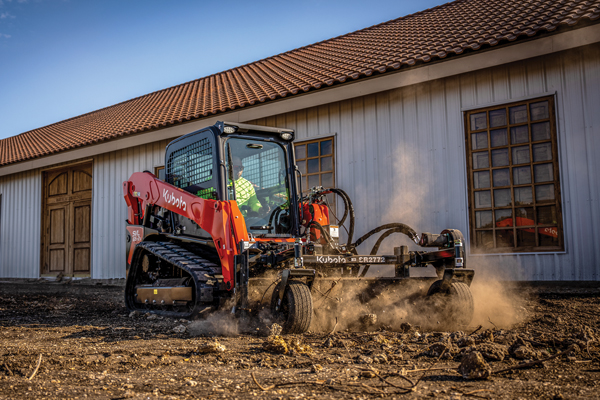
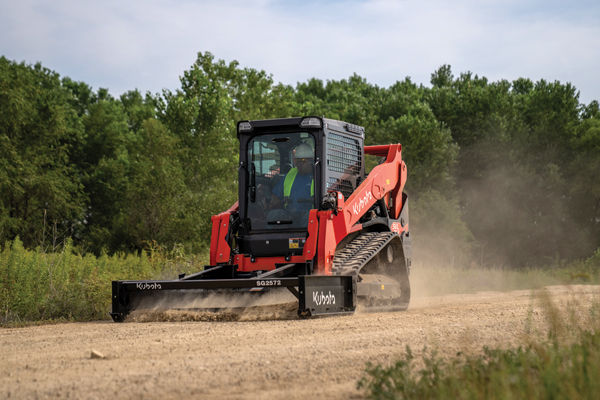 For many contractors, the question is no longer “Do we own this equipment?” It’s “Does ownership make financial sense?” For seasonal, project-specific, or specialized equipment, the answer increasingly is no. Rentals offer the capability contractors need without the capital drain and maintenance burden of ownership.

 Partagez sur Facebook / Share on Facebook